
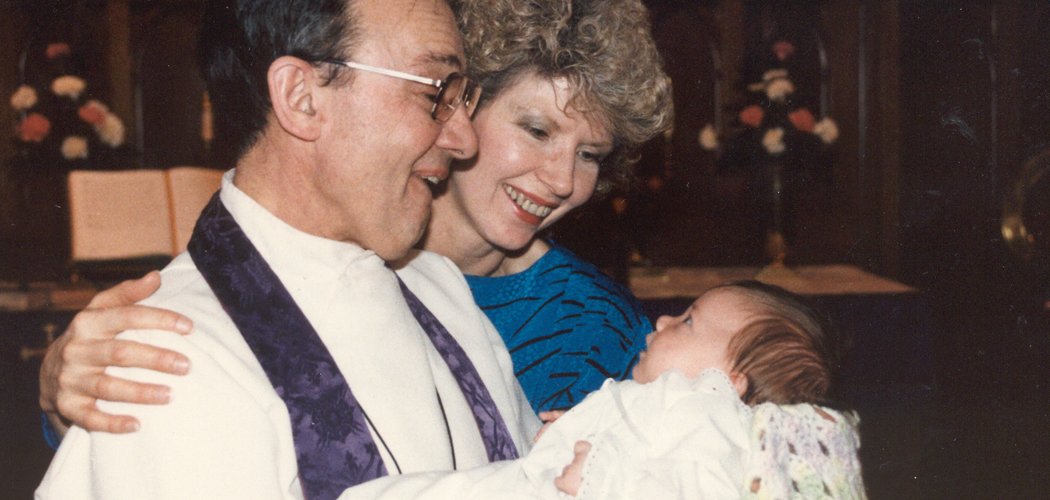
“I think that the church put expectations on my parents, resulting in my parents being extremely self-conscious with every thing they (and their kids) did.”
“In many ways, I feel like I’m still a kid who’s angry at my parents. That becomes less and less defensible the older you get. The problem is that I was a really good kid for a long time, so it feels new, you know?”
I always knew there was a thing about pastors’ kids. I knew it before Katy Perry and Daniel Tosh came along to shoot our expectations full of cherry-sized holes. I knew it before I’d ever heard of Aretha Franklin or Alice Cooper.
What I’m not sure of is how I knew.
My parents being pillar-of-the-church types, I grew up on familiar terms with both pastors’ and missionaries’ kids (PKs and MKs, for brevity’s sake). We spent holidays together sometimes. We went to each other’s birthday parties. We secretly peed in the pools of their furlough homes, loaned to them by other church members for their summers off the field.
On occasion, my PK and MK friends were snotty and mean. I don’t remember feeling surprised by this — experience showed me that they were normal kids, with consciences of average softness.
But I do remember feeling an inhibition about being mean back to them. Maybe I was afraid my sin would find me out, that if they tattled on me, their parents would get back to my parents and the repercussions would be more serious, because when a pastor is involved, it can never be just a personal problem; it’s a church problem. Maybe even a spiritual problem.
As a teenager, I overheard some adults gossiping about some of my childhood friends. I learned that Dr. Franklin and his wife couldn’t seem to help their anorexic daughter, no matter how many counsellors they saw. And Jason and Jonathan, the sons of our church’s most dynamic missionaries, were caught using drugs shortly after returning from Papua New Guinea.
I was surprised by these revelations, but I was equally surprised by the tone of inevitability with which they were told. It seemed that my friends had lived under a collectively bated breath, as people waited to see which side of the line they’d fall on.
Whether we saw it coming or not, feared it, or had never once thought about it, we all wanted to know what had happened. Something, surely, must have.
“It was cool when [dad] first became a pastor. Because pastor’s kids get a lot of attention. Everybody wants to play with you and be your friend. But I guess as you get older, something else happens.”
After one failed attempt after another to get any PKs or MKs to talk to me for this article, I jokingly asked one that I’d tracked down if they were sworn to secrecy upon turning 18.
He responded seriously, “It’s possible.”
Regardless of any Freemason-like bond of secrecy, it seems likely that many PKs and MKs just don’t want to answer any more questions about their upbringing. The ones that I did manage to convince to talk with me seemed all too familiar with the stereotype, perhaps some even agree with it. As one of them told me:
“Either you’re super zealous, or super rebellious. You follow exactly your father or mother’s footsteps, or you go completely off the deep end. I don’t see that many middle-of-the-road people when it comes to pastors’ kids.”
Another put it this way: “Many are either in ministry, or into sex, drugs, and rock and roll.”
I find it weird that this stereotype seems to be the source of its own continuity, like a perpetual motion machine. One PK told me that as a kid she attended a church-run school that often invited prodigal PKs to come back and give their testimony. The message they delivered, as she remembers it, went something like this:
“Choosing to live in the secular world [means] you’re going to have an abortion, and you’re never going to feel whole again, and your life is going to suck from now on.”
Another guy, who grew up as both a PK and MK, explained that he was always unwilling to be regarded as an example of what his father taught in church.
“I don’t have any illusions that I live in a way that functions well,” he told me. “I don’t want anyone looking at me as an example.”
Right or wrong, pastors are often assumed to be the best Christian in their church — they are, after all, meant to teach the rest of us how to be better Christians. Their children are, by extension, assumed to be evidence of the best Christian parenting — and most of the children are acutely aware of this.
Maybe this awareness is what makes PKs and MKs choose between the church and the world more quickly, whereas most people are content to ride the fence. With so much hanging on your behavior — possibly even your parent’s job — I can see how it would be a relief to either exceed the expectations, or else shatter them, as soon as possible.
But that’s coming from me, admittedly inclined toward extremes. There are plenty of PKs and MKs who keep their upbringing on the down-low as long as they can, hoping to avoid the scrutiny they grew up with.
“I think people just assume that you are super good, and have it all together. Or they expect something of you. Or they expect you to live a certain life. At least with older people, they expect you to fit the mold of being a perfect Christian.”
“I never wanted to be categorized, especially in high school and college, as a pastor’s kid. Not because there was some stigma. I just wanted to be [thought of as] normal.”
The PKs generally agree that the MKs have an easier gig. Maybe, they say, it’s because MKs live outside the immediate scrutiny of the North American church. The expectations are between them and their parents; native people are unlikely to judge them for getting an ear pierced or for trying a cigarette.
Or maybe it’s because MKs see their parents sacrificing their own comfort, with none of the rewards accorded to clergy in the Western world. Maybe it’s because MKs don’t constantly have to watch their peers do things that they can’t do without hurting their parents’ reputation.
For an insider’s view on this, I talked with the parents of a childhood MK friend. One of their daughters (my friend’s older sister) decided upon reaching adulthood that she didn’t believe what she’d been raised in. They didn’t go into details, so I don’t know if she did anything spectacular, or just left the church. She’s now married and raising her first child. The parents are happy that the relationship with their daughter is intact; they’re also grieved that she doesn’t believe.

“For me as a pastor’s kid, it’s incredibly hard to try to read the Bible without this felt board Sunday school filter on it.”
“I’m not dumb enough to throw out the belief system, like a lot of pastors’ kids and church kids do. My thing with not going to church is . . . it’s like family business. I can’t go without going, ‘Oh, they really could do that PowerPoint presentation better.’”
Last year I was interviewing a rock musician named Joshua who told me a story about finding out the secret religious back-story of Marcus Mumford, of Mumford and Sons fame.
“We were talking, and he was like, ‘Oh, it was such a blessing.“ My praydar went off and I was like, ‘You’re a pastor’s kid.’”
After a moment, I said,
“Praydar?”
He nodded, explaining, “There’s a whole terminology.”
As it turned out, he also was a pastor’s kid. And I remember thinking, “I knew it.”
Joshua told me that it never quite leaves you: the consciousness of God, the self-consciousness of sin, the framework of good and evil and then that thing in the middle — the “not good.” As in, “That movie is not good,” or “That music is not good,” or “Those friends are not good influences.”
“What they meant by not good,” he said, “was that it had sex in it. And it’s like, well, the world has sex in it, you know?”
“I was like, ‘This guy’s totally a pastor’s kid.’ Because he’s so offensive, so over the line, in a way like [he’s] trying to. And I know that well — ‘I’m going to be a real boy! I’ll swear more than all the other boys.’”
“Everything they told me I shouldn’t do, or are bad, are the things that I’d later find out are fun! Whether it is good for me or not.”
All kinds of people are going to become pastors of all kinds of churches, and end up having all kinds of kids, who end up reacting to the church and the world in all kinds of ways.
One PK I talked with said he enjoyed his childhood in the church, but nevertheless has lived his life systematically testing the limits of what is spiritually permissible.
Another MK was fairly resentful of the lifestyle rules (she called them “ministry guidelines”) imposed on her family, but the uneasy peace she made with her limitations grew into a broader acceptance of others’ differences, both in the church and outside it.
One guy loved the constant presence in his home of people who sought his parents’ counsel, and looks forward to making in-home ministry a part of his kids’ lives. Another guy said that that same experience, and the exposure to problems in supposedly happy Christian homes, has made him deeply opposed to ever getting married or having kids.
I spoke with only one person who said that she thrived on her upbringing as a pastor’s kid. Perversely, she ended up losing her faith at a Christian college. “I was afraid to rebel,” she says. “I was afraid of becoming that story.”
When she talked to people about what she was going through, they wrote her off, telling her she was going through a rebellious stage. It was a completely inaccurate diagnosis, she says; there was nothing she wanted to rebel against. In fact, she wanted to remain within the comforting embrace of the church. “I was super cozy there. I used to be so celebrated, the darling of the family and the community.”
Today, she runs into people she went to church and school with, and they invariably say things like, “What happened? I heard you went off the deep end.”
The question frustrates her, partly because of its assumptions. She didn’t get pregnant or involved with drugs; she didn’t even get any tattoos. She wasn’t angry at the church, or at God. She just didn’t believe in him anymore.
The question also frustrates her because she doesn’t have an answer. She doesn’t know what happened, besides that all the theology she’d grown up with stopped making sense.
“Pastors’ kids are held to a little bit higher standard, so it’s easier to make us a target because it reflects on [our] parents. For someone who’s a fireman, their kids don’t have a stereotype to live up to. Really, it doesn’t matter — it’s just what people make it. It’s just not an easy gig, and you don’t sign up for it.”
“My dad always said that if he was ever half the dad his father was, he’d be a success. That’s how I feel too about my dad.”
Maybe that’s our mistake — assuming that there’s a reason, a thing that happens, to pastors’ kids. Maybe we’re mistaken in assuming that being parented by a person who makes their living off the Bible ought to guarantee ownership of the gospel message.
Maybe growing up in ministry is more akin to learning a language. PKs and MKs have an in-depth education, eighteen years long, in all that the church holds most sacred. Whether they want to excel or rebel, they know exactly what will make for the most effective campaign.
They also have an insider’s perspective on the mechanics of religion. Many of us might regard the clergy, the worship service, and the life devoted to gospel preaching as something of a sacred mystery. But PKs practically live in the church; and many MKs literally do.
Questioning the assumptions you’re raised with is an essential part of maturing. (Even the Bible anticipates that children will ask their parents, “Why do we do this?” about religious practices.) But questioning is a trickier business for PKs.
“I was somebody who always questioned things,” one PK told me, “and that’s something that my father could not appreciate at all. That is a big part of why I ran into problems later. I don’t know if it’s just human nature or because I’m inquisitive. Nobody defined certain things for me, and they couldn’t back it up with anything other than ‘I said so.’”
For this particular PK, organized religion is dependent on ignorance and its attendant fear and neediness. People who feel themselves in danger of going to hell — or of just ruining their lives — will give a lot of money to someone who has salvific answers for them.
Another PK told me that this emphasis on having answers for every doubt short-circuits real faith. He says it’s what turned him away from the church.
“The search for those answers is incredibly important. You want to know you’re doing it only because you wanted to do it. Which is why I get so frustrated with the rigid do’s and don’ts of the church.” As a pastor’s kid he says he was expected accept the answers blindly.
“I just feel an inevitability. Like a Jonah thing. I’ve got the ‘knowing that I’ll be judged’ thing down. I’m conscious of that all the time. But . . . I haven’t made that turn yet.”
“Maybe that’s what’s in a lot of pastors’ kids minds when they rebel: ‘One day I’ll go back, and he’ll forgive me.’”
I know what it’s like to admit to God that you really don’t believe what He says about Himself. In some ways, it must be even harder to admit to your parents that what they’ve devoted their lives to doesn’t mean as much to you as it does to them; that you don’t believe their religion is true and you’d rather do something different. But knowing how people would react, maybe you’d just be quiet about it, as long as you could.
That, of course, is assuming you didn’t believe. If you did, there’s the inherent tendency to judge yourself by your parents’ standard. If you saw your pastor parent as a bad Christian, you might want to be so much better; if they were good, you hope to rise to the bar they’ve set.
Maybe that’s the thing with PKs and MKs — that they aren’t measured just by their potential. They’re measured by the bars set by the church, by their parents, and by what a pastor’s kid is supposed to be.
You’ll be better, you’ll be smarter
And more grown up, and a better daughter or son
And a real good friend
You’ll be awake, you’ll be alert, you’ll be positive,
though it hurts
And you’ll laugh and embrace all your friends
You’ll be a real good listener, you’ll be honest, you’ll be brave
You’ll be handsome and you’ll be beautiful
You’ll be happy
— Rilo Kiley, “A Better Son/Daughter”
Flickr photo (cc) by CaptPiper & tcd123usa


