

Frances Ha is a comedic drama about the life of Frances (Greta Gerwig), a 27-year-old woman living in New York. The film follows Frances in her quest to not only to become a dancer, but to also figure her life out.
Written and directed by Noah Baumbach and shot in black and white, Frances Ha uses deceptively simple choreography, enabling its characters and setting to breathe. It’s reminiscent of mid-career Woody Allen features like Manhattan or Annie Hall, or even Josh Radnor’s Liberal Arts. Full of romanticism about youth and the city, the film also reveals a deeper layer of character underneath it all.
Gerwig, who so often plays a quirky hipster, has the perfect mixture of neurosis-riddled angst and youthful optimism. She comes across as a real human being, not just some character in a movie.
But her life is the worst possible nightmare for many millennials — she’s in her late 20s with no career options, doesn’t have the talent to achieve her dreams, and has nothing to her name. Frances meanders through life without any breakthroughs or achievements.
Throughout the movie, Frances is frivolous with her money and relies on a part time job with slim prospects of fulfilling her desired career. She’s living completely for the moment, not giving serious thought towards the future except for unrealistic dreams that she never tries to actualize.
Frances’s social life is her main priority; she spends all her time at parties or with friends. But she also can’t help but compare her life to her seemingly successful friends with an envy she tries to repress, but can’t.
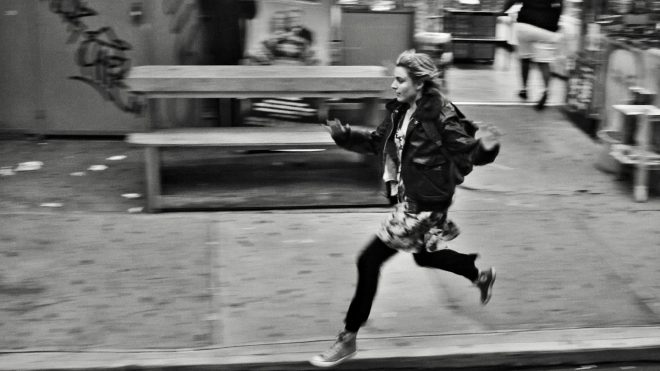
A monologue by Frances perfectly encapsulates how she views life:
“It’s that thing when you’re with someone, and you love them and they know it, and they love you and you know it… but it’s a party… and you’re both talking to other people, and you’re laughing and shining… and you look across the room and catch each other’s eyes… but — but not because you’re possessive, or it’s precisely sexual… but because… that is your person in this life. And it’s funny and sad, but only because this life will end, and it’s this secret world that exists right there in public, unnoticed, that no one else knows about. It’s sort of like how they say that other dimensions exist all around us, but we don’t have the ability to perceive them. That’s — That’s what I want out of a relationship. Or just life, I guess.”
The problem is that she can’t get to that point; she’s still growing. She’s in the midst of working through her life with fear and trembling, but also with great joy and — eventually humility.
Frances Ha probes our generation with grace and humour, rather than the judgmental mindset of articles like, “The Me Me Me Generation.” There are problems with millenials, but the film isn’t content to finger wag and leave it at that. There are moments where I wanted to scream at Frances to get her life together; but that was me, not the film. It highlights Frances’s faults, lets us scoff and scorn her, and then it gives her grace.
And in doing so it forced me to extend grace to her as well, and realize that I don’t have life as figured out as I thought I would by now.
Frances Ha instils warmth in its critique and explores the struggle of treating people as people, instead of part of a collective.


